
The GeoTech Center will work with the Sweetwater Union High School District (SUHSD) and engineers from The U.S. Navy Naval Air Systems Command (NAVAIR) to develop a Center-sponsored UAS Competition, designed to encourage students to actively engage in fun and rewarding Science, Technology, Engineering, Art and Math (STEAM) activities. Through participation in the challenge, students will be exposed to a myriad of real-world problems and processes, while developing teamwork and presentation skills.
Award Winning Firm
Under the mentorship of local educators and engineers, teams of students (from high schools and colleges) will be provided technical data and kits to build a baseline Small UAS (sUAS). Teams may modify the baseline design as long as modification(s) are within the designated limitations. Students will be required to pass a safety inspection, submit a Preliminary Design Report (PDR), and present their completed design to engineer/educator judges. The main Challenge will then be comprised of two portions that will be completed separately. Portion One (Sling Load) will require each team to demonstrate their capability to capture and carry a sling load, while Portion Two (Race) will test the teams maneuverability and control of their aircraft through an obstacle course. Judging will consist of 30% PDR, 25% Presentation, and 45% Challenge.
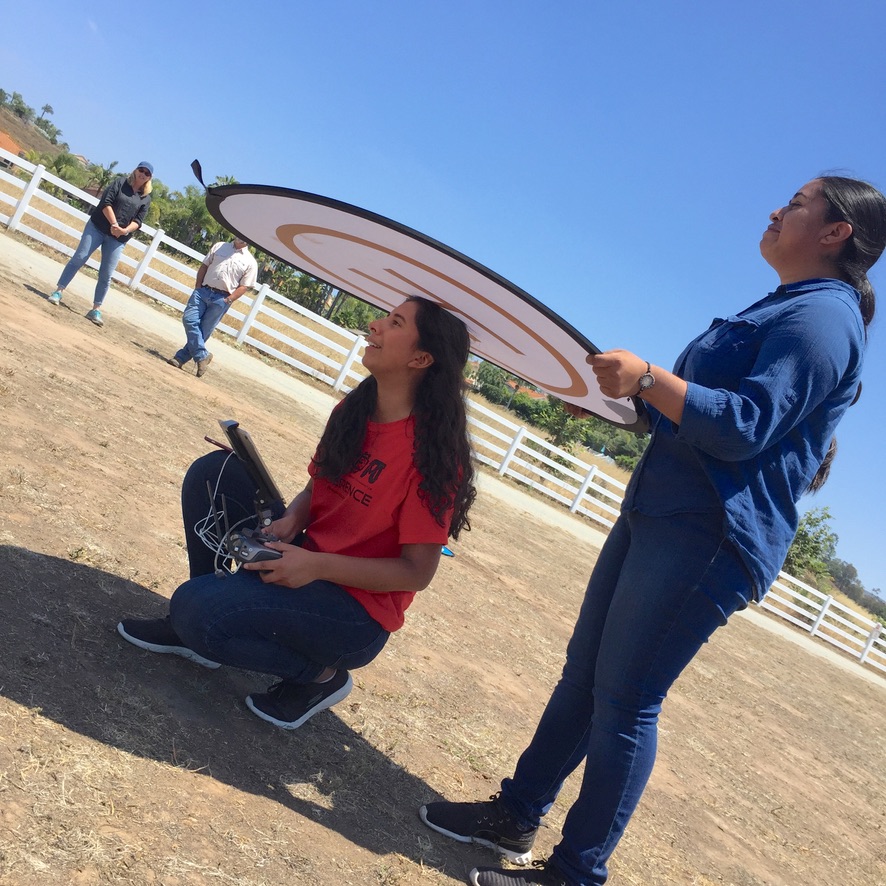
The following is a preliminary outline of the competition (this outline is subject to change):
- Teams will be composed of 4-6 members.
- Each team must have a member who will be responsible for maintaining the financial records of the team. This person will take on the role of Financial Administrator. Each team will have a designated budget that they may not go over, this includes any items provided by SUHSD. For example, the components provided by SUHSD for the build must be recorded on the teams’ budget as an expenditure.
- The objective of the UAS Challenge is to build a remote-controlled quadcopter that can deliver a payload to a target Landing Zone (LZ) and race through an obstacle course, all within budgetary constraints. All teams must demonstrate maneuverability and control of their sUAS. Teams can improve upon the existing sUAS design to better meet these objectives.
- The following Table lists the roles and responsibilities of team members. Please note that the number of roles exceeds the size of the team. Team members are expected to take on multiple roles. All team members are expected to contribute to the report and presentation.
| Role | Project Responsibility | Competition Responsibility |
| Chief Engineer (Team Captain) | Team lead; responsible for the overall project, including but not limited to; creation and execution of the schedule, functioning as the point of contact between the mentors and teams. | Coordinate between pilots, maintenance crew, and competition officials. Is able to perform mission-planning function. |
| Financial Administrator | Responsible for maintaining account ledger of entire project. | Produce auditable records or ledger of team expenditures. |
| Pilot (3) | Responsible for precision flying of the UAS, as well as tuning its flight characteristics. | Airframe can start up and hover between 3- 6 ft altitude within a 10-foot diameter circle for 10 seconds. Airframe is able to lift off maintaining an altitude of 3-10 feet and fly to a 10-foot diameter circle 30 feet away, turn 180° then return to starting point. |
| Pilot Alternates (1) | Responsible for all pilot responsibilities, should the pilots be unavailable. | |
| UAS Designer | Responsible for the design of any modified components of the baseline UAS and creation of the subsystems. CAD work involved. | All parts shall remain secured and properly attached to the airframe. Conduct a visual inspection of wiring and structure. All structural components shall be secured and ready for competition. Ensure avionics pass system start up test (all electronics functioning normally on tarmac). Quadcopter is able to idle on the ground. All equipment not permanently attached to airframe is secured and ready for competition. |
| UAS Production | Responsible for producing 3D printed components and assembling the UAS and subsystems. Some CAD work involved. | |
| Maintenance | Responsible for assembly, repair and maintenance of UAS and subsystems. Works in conjunction with production. | |
| Safety/Quality Assurance (QA) | Responsible for ensuring UAS is always flight worthy and meets safety requirements. | Assembled airframe is secured and can be shaken (no visible movement of parts or signs of “rattles”). Airframe can be dropped upright onto a flat hard surface from a height of approximately 4 feet, in which all parts shall remain secured and properly attached to the airframe. |